The East Bolton Railway
Numerous companies were formed, each building their own section of the railway as an ideal means of developing this part of the country, rich in timber and ore. Among these companies was the Missisquoi & Black Rivers Valley, which, in 1871, began construction of a railway for the transportation of timber and ore, from Richmond in the north to Mansonville and Highwater in the south. However, ten years later, only part of this project had been completed: the one connecting the Huntingdon Mine (called Dillonton) to Bolton Centre and South Bolton.
The Black River and Missisquoi Valley Railway, which connected to Eastman in the north from Dillonton Station, served Bolton Centre (station photo), South Bolton (station photo), Potton Mineral Spring (which was first called Bolton Spring), Mansonville and its station, and then reached the border at Highwater.
The reasons for this relative failure were mainly the difficulty in raising funds for this enterprise, combined with the problem of eligibility for subsidies intended for the construction of railways in the country. Subsequently, the company abandoned the project of building the northern section of the railway and reformed under the name Missisquoi Valley Railway.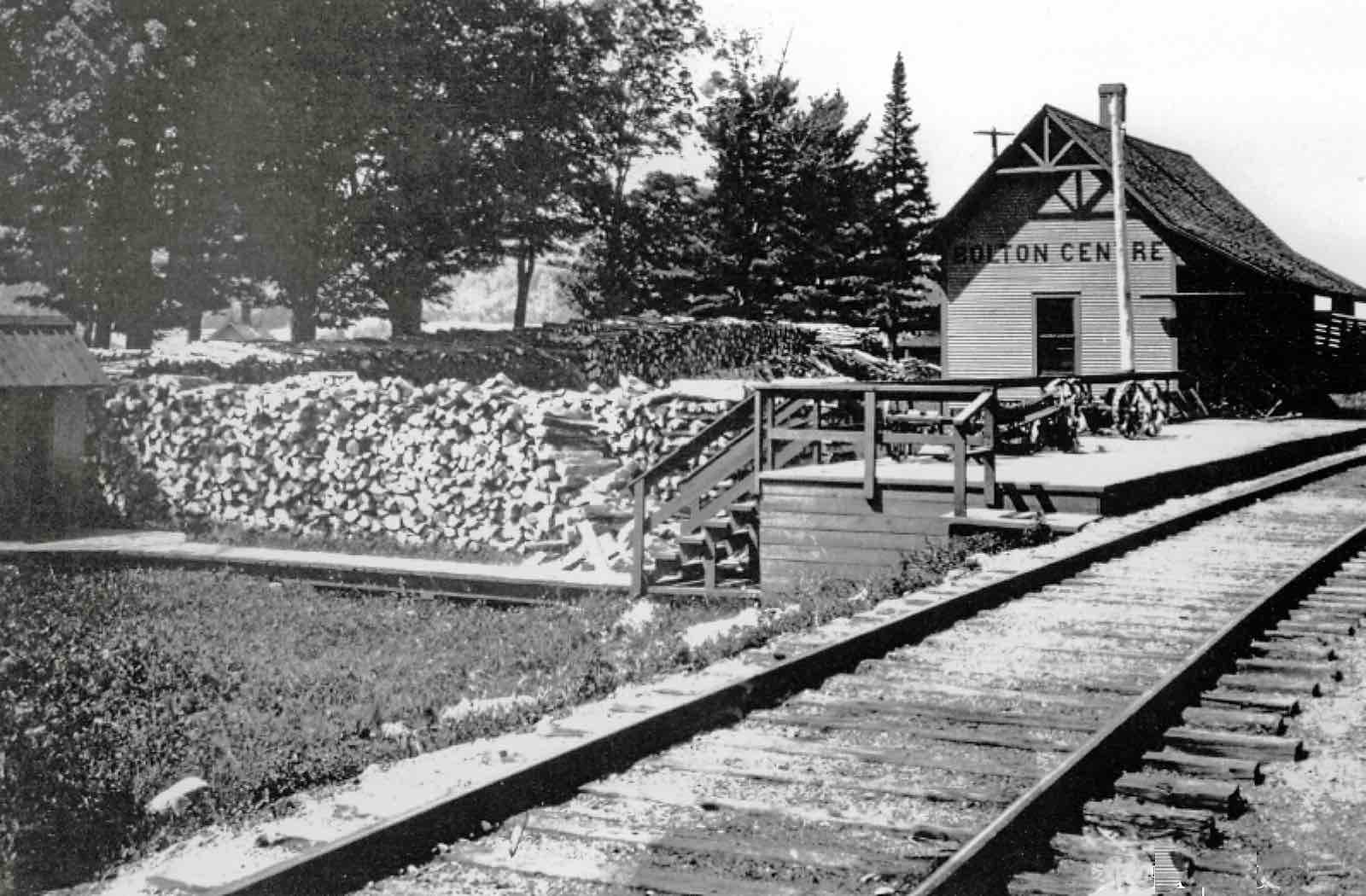 Gare de Bolton Centre
At the turn of the century, the Canadian Pacific Railway (CPR) completed the original M&BRV project, but not without first acquiring most of the smaller regional companies operating in the same field. Unfortunately, the geographical constraints of the North Missisquoi River Valley were enough to make the resource exploitation business there unprofitable and to make rail transportation an unprofitable operation.
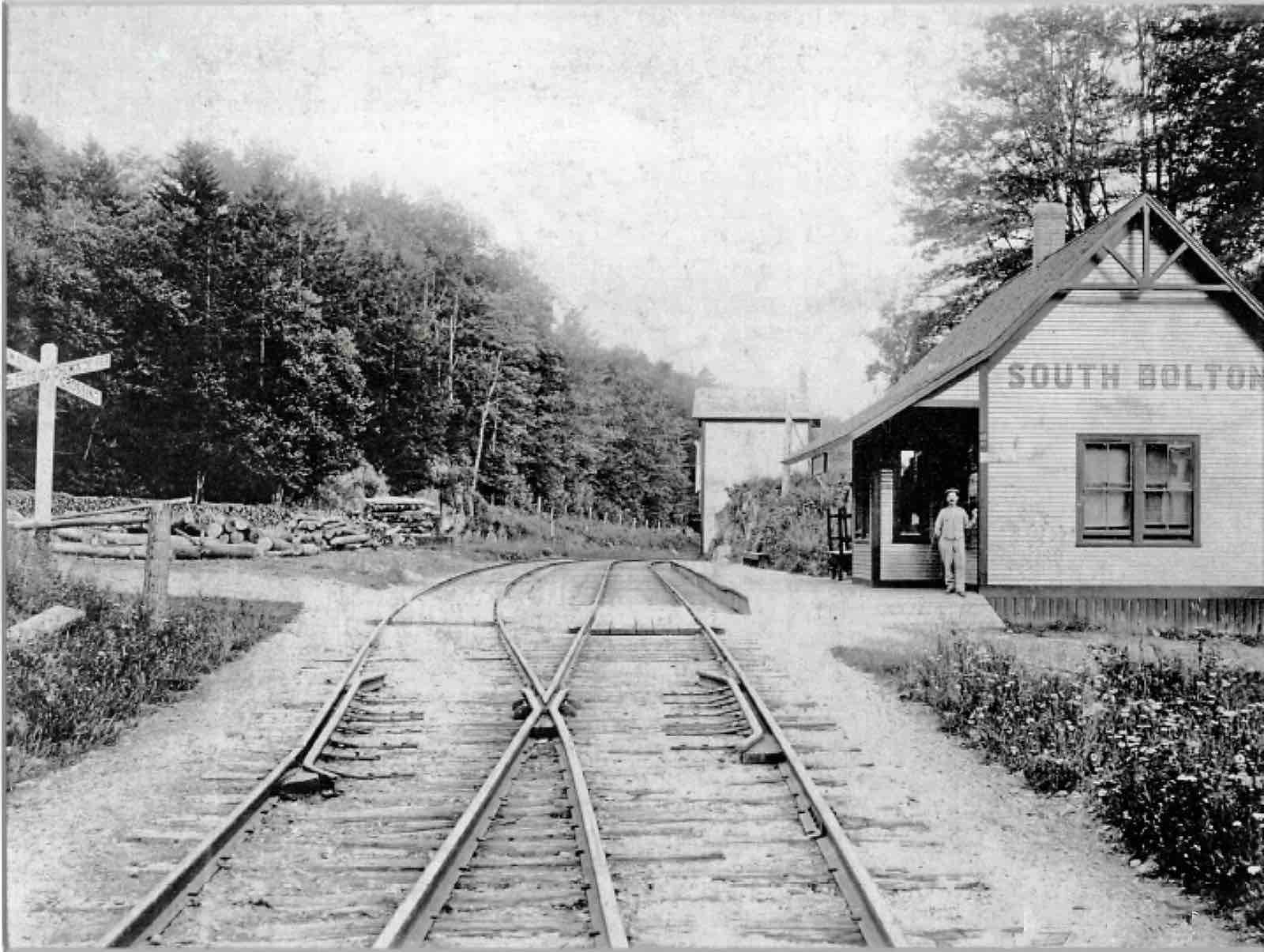 Gare de South BoltonFinally, on April 1, 1936, rail service ceased on this 22.8-mile line between Eastman and North Troy, Vermont. After 60 years of railroad-related economic activity, interspersed with periods of crisis and stagnation, Bolton was taken off the rail line and settled into rural tranquility.